
Common projects
Where this service fits
Why mulching is different from bulldozing
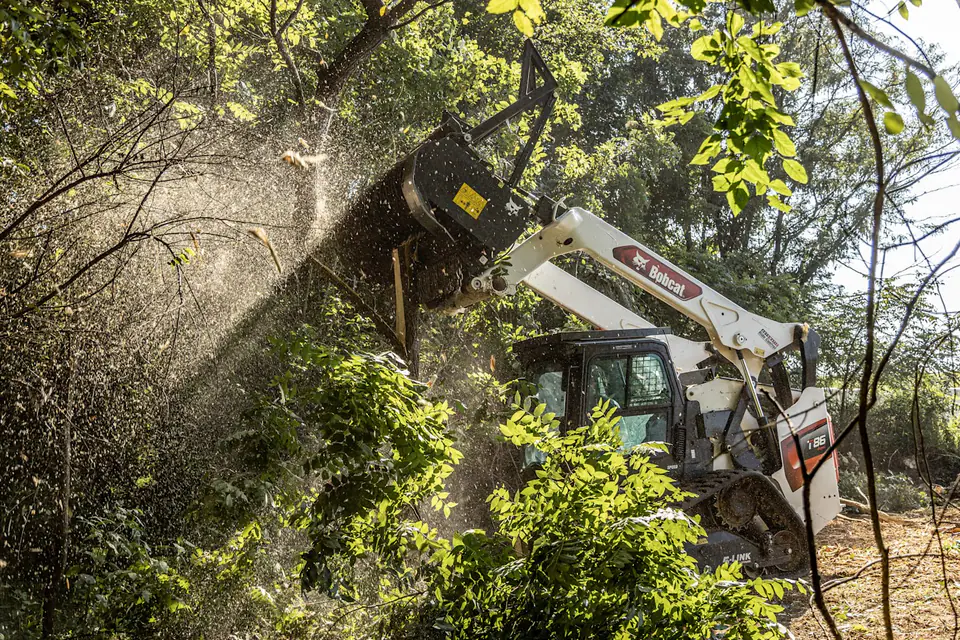
A mulcher reduces standing vegetation to chips in a single operation. Roots generally remain in place, topsoil is not intentionally stripped, and there are no brush piles to burn or load. The finished surface is natural rather than construction-grade, making it useful for landowners who want access and visibility without fully excavating the site.
The mulch layer provides temporary cover for exposed soil and returns organic material to the site. Depth varies with vegetation density. Thick windrows of mulch are not always desirable, so distribution and the expected appearance should be discussed before work.
Where forestry mulching works best
Mulching is highly effective on dense brush, vines, cedar, volunteer trees, neglected fields, trails, fence approaches, hunting land, and wooded lots that need selective thinning. Tracked machines can work on many uneven or soft sites, but steep slopes, saturated soils, hidden dump material, large rock, wire, and limited access may require a different plan.
Tree diameter is only one factor. Species, trunk form, lean, density, proximity to structures, and the mulcher’s safe working space all matter. Large or hazardous trees may need conventional tree removal before surrounding brush is mulched.
What forestry mulching does not do
Mulching does not remove every root, create a compacted building pad, guarantee a mow-ready lawn, or permanently stop all regrowth. Many woody plants can resprout from roots or return from seed. Follow-up mowing, targeted treatment, grazing, or periodic maintenance may be needed depending on the property goal.
Buried trash, tires, concrete, metal, wire, and unknown debris must be identified and removed separately. Feeding contaminated piles into a mulcher can damage equipment and scatter material across the site.
Long-term vegetation management
The first clearing opens the property; maintenance keeps it open. A practical plan may include seasonal mowing, brush cutting, selective herbicide by an appropriately qualified applicator, follow-up mulching, or converting cleared ground to managed grass. The right cycle depends on rainfall, species, soil, sunlight, and how the property is used.
Owners who want a park-like understory should expect a different scope from owners who simply need a one-time access corridor. We define the target appearance so time is spent where it matters.
Scope options
What can be included
Property-owner questions
Forestry Mulching & Brush Control FAQs
Does forestry mulching remove stumps?
It can grind small stumps and woody material close to the surface, but complete root-ball removal requires grubbing or excavation.
How many acres can be mulched per day?
Production varies widely with density, diameter, terrain, access, rocks, and the desired finish. Open brush moves much faster than tightly packed timber.
Can you work around oak trees?
Yes when spacing and access allow. Keeper trees should be marked, and unnecessary traffic over critical root zones should be avoided.
Will mulch prevent erosion?
Mulch can reduce exposed soil and slow surface movement, but it is not an engineered erosion-control system. Steep or disturbed sites may need additional controls.
Does the mulch need to be removed?
Usually no. It is commonly left onsite to decompose. Excess material can be redistributed or addressed separately if the next use requires a cleaner surface.