Mesquite
Where it shows upOpen pasture and disturbed ground.
Project effectPersistent root crowns can resprout. Full removal is more appropriate where future mowing, paving, or grading requires control.
 DentonLand Clearing
Ponder, Texas
Ponder properties commonly combine open prairie, ranch use, clay ground, and brush concentrated along fence lines, homesteads, and drainages. Every project is approached with careful execution and close attention to the finished result.
Local ground, local decisions
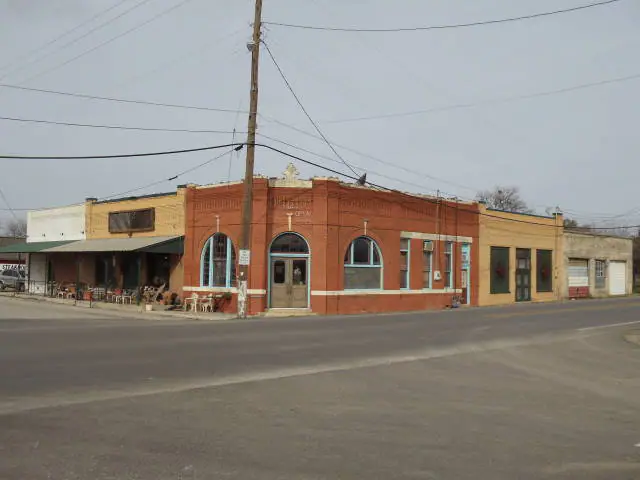
Ponder is a rural community west of Denton surrounded by farms, ranches, and growing homesites. Parcels tend to have longer equipment approaches and fewer alternate access points.
Much of the woody work is concentrated rather than uniform, favoring a plan that treats road frontage, fence rows, drainage, and build areas differently.
The visual openness of western Denton County makes access and future layout easier to read, but it also puts more importance on the shade trees and windbreaks that remain. Clearing decisions should account for exposure, dust, and long-term maintenance.
Trees & vegetation
Tree species can hint at drainage, soil, historic land use, and maintenance needs. Identification, health, and exact site conditions should still be confirmed on the property.
Where it shows upOpen pasture and disturbed ground.
Project effectPersistent root crowns can resprout. Full removal is more appropriate where future mowing, paving, or grading requires control.
Where it shows upDrainages and homestead groves.
Project effectCan provide valuable shade, but crowded volunteers may be thinned to favor stronger trees.
Where it shows upFence lines and idle corners.
Project effectCreates screening but can overtake usable edge. Selective removal retains wind protection without leaving a solid wall.
Where it shows upOld fence lines.
Project effectDense wood and embedded wire require a careful inspection and sometimes hand cleanup before mechanical processing.
Clay-rich prairie soils can be slow to dry and can shrink or crack in drought. Rough grading should move water without creating a new low spot beside a future pad or drive.
Tree-to-finish diagram
A tree can stay, be processed at the surface, or be removed with its root system. The future use makes the decision.
Important: A visual tree check is not an arborist risk assessment. Valuable, protected, or questionable trees may need review by a qualified arborist.
Planning in Ponder
On open prairie, removing the wrong mature grove is difficult to undo. Set the home, barn, and drive layout before deciding the final canopy.
Long rural drives and neighboring properties benefit from a defined entrance, clean-out area, and debris strategy.
Raised drives and base material need culverts or low-water planning where natural flow crosses the route.
A better project sequence
Confirm boundaries, easements, utilities, drainage, and the future layout.
Identify clearing limits, keeper trees, access, staging, and protected areas.
Use mulching, cutting, grubbing, haul-off, or a combination by zone.
Backfill, rough grade, stabilize, and leave a defined handoff for the next trade.
Services in Ponder
Start with the closest match. Related work can be coordinated into one clear, quality-focused site plan.
Clear, grub, and prepare property for construction, agriculture, access, or sale.
Service details →Process brush, cedar, saplings, and unwanted understory into an onsite mulch layer.
Service details →Remove selected trees, root balls, storm debris, and unwanted material from the work area.
Service details →Shape rough ground and create workable routes for vehicles, equipment, drainage, and construction.
Service details →Open maintained corridors for fencing, utilities, equipment, recreation, and inspection.
Service details →Reclaim grazing ground, maintain acreage, and manage regrowth over the long term.
Service details →Mulch, wood chips, topsoil, fill, and driveway aggregate delivered for property projects.
Service details →Common local projects
Before work begins
Quotes consider vegetation type and density, tree size, terrain, access, stumps, debris handling, acreage, and the finish expected after clearing. Photos help, but an onsite review is the reliable way to confirm scope.
The owner provides reliable boundaries, easements, and work limits. Public utilities must be located before digging, and private lines such as irrigation, septic, electric, or propane may need separate identification.
Tree-preservation, floodplain, burn, development, and grading requirements vary by property and project. Owners should confirm current rules with Ponder, Denton or Tarrant County as applicable, and any other authority before work.
Ecology and soil guidance is informed by the Texas Parks & Wildlife Cross Timbers overview, Ray Roberts Lake natural-area guide, and USDA soil survey resources. These regional references do not replace parcel-specific surveys, engineering, arborist advice, or current local requirements.
Top-quality work. Clear expectations.
We carefully plan and execute clearing, mulching, grading, access, and material work around the property, the agreed scope, and the result you expect.