Mesquite
Where it shows upPasture and disturbed open ground.
Project effectCan resprout after top removal. Long-term conversion to mowable ground or a pad may require root-crown removal and follow-up control.
 DentonLand Clearing
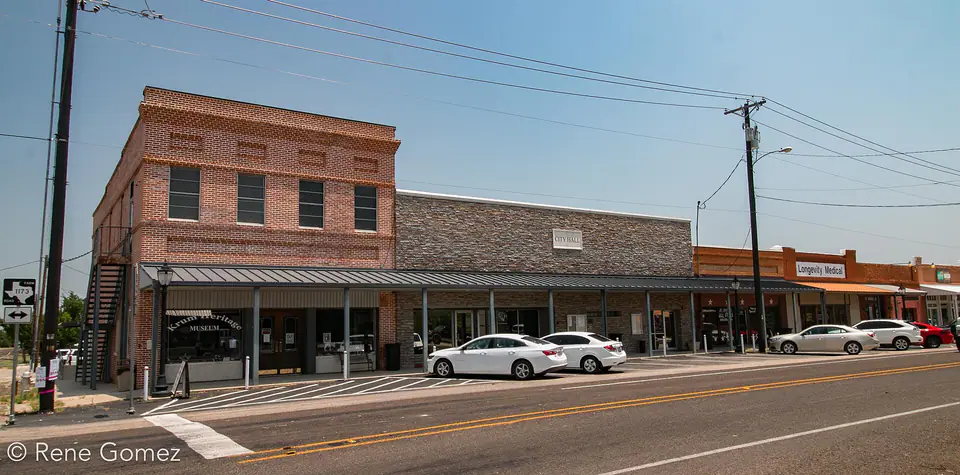
Krum, Texas
Krum-area land is often more open and agricultural, but brushy fence rows, mesquite, drainage lines, and future access still shape the scope. Every project is approached with careful execution and close attention to the finished result.
Local ground, local decisions
Krum lies west of Denton in a landscape with broad fields, ranch tracts, and lower-density development. Wind exposure, long approaches, and agricultural access are common planning factors.
Tree cover is often concentrated along roads, old homesteads, fence lines, and drainages, making selective edge work especially useful.
Former fields and grazing ground may need less tree removal than wooded Cross Timbers parcels, yet miles of edge growth, old wire, ruts, and isolated tree clusters can make production uneven. The finish should match whether the land returns to agriculture or moves toward construction.
Trees & vegetation
Tree species can hint at drainage, soil, historic land use, and maintenance needs. Identification, health, and exact site conditions should still be confirmed on the property.
Where it shows upPasture and disturbed open ground.
Project effectCan resprout after top removal. Long-term conversion to mowable ground or a pad may require root-crown removal and follow-up control.
Where it shows upDrainages, homesteads, and fence rows.
Project effectDense growth can hide wire and debris. Good specimens may provide rare shade on otherwise open acreage.
Where it shows upIdle corners and windbreaks.
Project effectUseful screening when intentional; unmanaged clusters consume usable edge and create heavy mulch volume.
Where it shows upLower ground and older farmsteads.
Project effectLarge crowns and roots deserve generous protection if retained; their presence can also suggest deeper or wetter soil.
Heavy prairie clay can be productive but unforgiving when saturated or over-compacted. Disturbing it during the wrong conditions can leave deep ruts that cost more to correct than to avoid.
Tree-to-finish diagram
A tree can stay, be processed at the surface, or be removed with its root system. The future use makes the decision.
Important: A visual tree check is not an arborist risk assessment. Valuable, protected, or questionable trees may need review by a qualified arborist.
Planning in Krum
Wire, steel posts, concrete, and dumped material are hard on mulching equipment and should be exposed or removed before production begins.
Surface cutting changes appearance, but mesquite and other woody plants can return. Match the method to the maintenance plan.
Avoid unnecessarily stripping or mixing good topsoil with subsoil when the land will remain pasture, agricultural, or landscaped.
A better project sequence
Confirm boundaries, easements, utilities, drainage, and the future layout.
Identify clearing limits, keeper trees, access, staging, and protected areas.
Use mulching, cutting, grubbing, haul-off, or a combination by zone.
Backfill, rough grade, stabilize, and leave a defined handoff for the next trade.
Services in Krum
Start with the closest match. Related work can be coordinated into one clear, quality-focused site plan.
Clear, grub, and prepare property for construction, agriculture, access, or sale.
Service details →Process brush, cedar, saplings, and unwanted understory into an onsite mulch layer.
Service details →Remove selected trees, root balls, storm debris, and unwanted material from the work area.
Service details →Shape rough ground and create workable routes for vehicles, equipment, drainage, and construction.
Service details →Open maintained corridors for fencing, utilities, equipment, recreation, and inspection.
Service details →Reclaim grazing ground, maintain acreage, and manage regrowth over the long term.
Service details →Mulch, wood chips, topsoil, fill, and driveway aggregate delivered for property projects.
Service details →Common local projects
Before work begins
Quotes consider vegetation type and density, tree size, terrain, access, stumps, debris handling, acreage, and the finish expected after clearing. Photos help, but an onsite review is the reliable way to confirm scope.
The owner provides reliable boundaries, easements, and work limits. Public utilities must be located before digging, and private lines such as irrigation, septic, electric, or propane may need separate identification.
Tree-preservation, floodplain, burn, development, and grading requirements vary by property and project. Owners should confirm current rules with Krum, Denton or Tarrant County as applicable, and any other authority before work.
Ecology and soil guidance is informed by the Texas Parks & Wildlife Cross Timbers overview, Ray Roberts Lake natural-area guide, and USDA soil survey resources. These regional references do not replace parcel-specific surveys, engineering, arborist advice, or current local requirements.
Top-quality work. Clear expectations.
We carefully plan and execute clearing, mulching, grading, access, and material work around the property, the agreed scope, and the result you expect.