North Texas's #1 Land Clearing ContractorServing Denton County, Fort Worth & surrounding communities
DentonLand Clearing
Planning a land project?Call now(940) 245-4693

Roanoke, Texas

Land clearing in Roanoke

Roanoke is a compact, fast-developed community where land work often happens near streets, businesses, neighborhoods, utilities, and established drainage infrastructure. Every project is approached with careful execution and close attention to the finished result.

Local ground, local decisions

What land work looks like around Roanoke.

Roanoke sits around the US 377 and SH 114 corridors in southern Denton County, with an established downtown, neighborhoods, commercial property, and remaining undeveloped parcels.

Local scopes are often selective lot preparation, overgrown edge cleanup, construction access, or tree removal tied to a defined development plan rather than open-ended acreage clearing.

Unlike broad-acre work farther north, Roanoke projects frequently require controlled clearing inside firm property limits with limited room for logs, chips, trucks, and soil. A clean access and staging plan can matter as much as production speed.

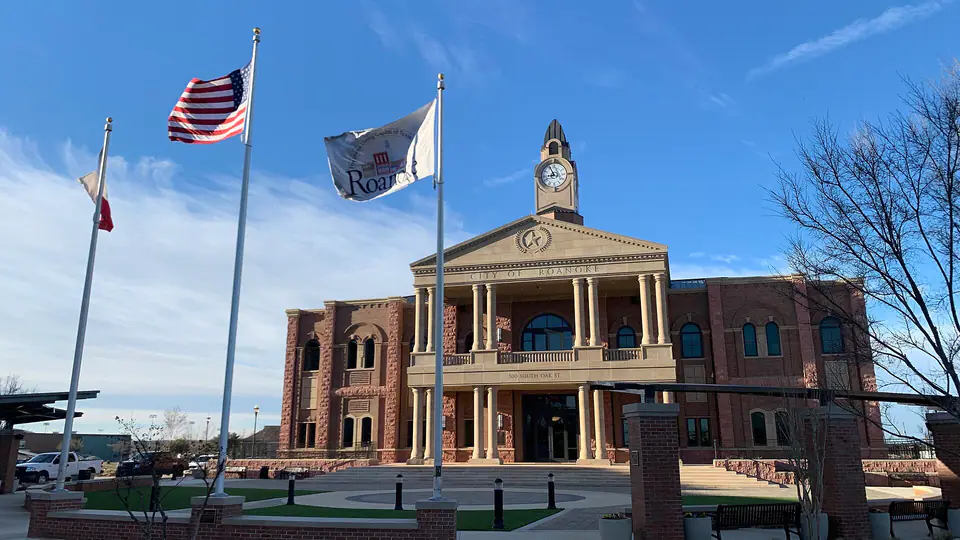
Roanoke City Hall in Roanoke, Texas
Roanoke City Hall in the developed US 377 and SH 114 corridor. Photo source

Trees & vegetation

Common trees around Roanoke and why they matter to the project.

Tree species can hint at drainage, soil, historic land use, and maintenance needs. Identification, health, and exact site conditions should still be confirmed on the property.

Cedar elm & hackberry

Where it shows upOlder lots, drainage edges, and disturbed property lines.

Project effectMulti-stem volunteers can crowd fences and structures. Root removal is usually appropriate where pavement, utilities, or building work will follow.

Post oak & live oak

Where it shows upEstablished properties and remnant upland canopy.

Project effectHealthy mature trees can be strong site assets. Protect roots and trunks from equipment turning, stockpiles, and grade changes.

Pecan, willow & cottonwood

Where it shows upCreek and lower drainage corridors.

Project effectMoisture-associated trees can signal softer access and bank-stability concerns. Selective work should keep runoff paths intact.

Eastern redcedar

Where it shows upUnmanaged screens and lot edges.

Project effectThinning can restore visibility and working room without exposing every neighboring view.

Ground condition

Soil and drainage shape the method.

Urbanized clay ground may include previous fill, utility trenches, compacted areas, and low drainage crossings. Existing inlets, swales, neighboring grades, and paved surfaces should stay protected and functional during the work.

Tree-to-finish diagram

Match the treatment to what happens next.

A tree can stay, be processed at the surface, or be removed with its root system. The future use makes the decision.

Start hereWhere is the tree relative to the finished plan?
Outside disturbance

Preserve

Mark the tree and a practical root-protection area. Keep traffic, cuts, fill, and stockpiles outside it.

Natural-use area

Cut or mulch

Process brush and smaller growth where roots can remain and a natural surface is acceptable.

Pad, drive, or utility

Remove & grub

Extract conflicting roots, handle the void, and leave the area ready for the specified earthwork.

Important: A visual tree check is not an arborist risk assessment. Valuable, protected, or questionable trees may need review by a qualified arborist.

Planning in Roanoke

Local conditions to settle before equipment arrives.

01

Build a compact staging plan

Small sites may need phased processing, smaller loads, or prompt haul-off because there is little room to keep debris and equipment separated.

02

Verify utilities and private lines

Developed property can contain public utilities, irrigation, lighting, drainage, and old service lines that are not obvious from the surface.

03

Protect streets and neighbors

Mud control, debris direction, work hours, truck turns, and clear property limits should be settled before the first machine enters.

A better project sequence

Clearing is one step in a complete site plan.

01

Map it

Confirm boundaries, easements, utilities, drainage, and the future layout.

02

Mark it

Identify clearing limits, keeper trees, access, staging, and protected areas.

03

Clear it

Use mulching, cutting, grubbing, haul-off, or a combination by zone.

04

Finish it

Backfill, rough grade, stabilize, and leave a defined handoff for the next trade.

Common local projects

Land uses we plan for around Roanoke.

  • Commercial and residential lot preparation
  • Selective tree and brush removal
  • Utility, fence, and drainage access
  • Construction entrances and rough grading

Before work begins

Answers for Roanoke property owners.

How is a land-clearing quote prepared?

Quotes consider vegetation type and density, tree size, terrain, access, stumps, debris handling, acreage, and the finish expected after clearing. Photos help, but an onsite review is the reliable way to confirm scope.

Who confirms boundaries and utilities?

The owner provides reliable boundaries, easements, and work limits. Public utilities must be located before digging, and private lines such as irrigation, septic, electric, or propane may need separate identification.

Are permits or tree rules required?

Tree-preservation, floodplain, burn, development, and grading requirements vary by property and project. Owners should confirm current rules with Roanoke, Denton or Tarrant County as applicable, and any other authority before work.

Regional planning references

Local planning context: City of Roanoke local information. Ecology and soil guidance is informed by the Texas Parks & Wildlife Cross Timbers overview, Ray Roberts Lake natural-area guide, and USDA soil survey resources. These regional references do not replace parcel-specific surveys, engineering, arborist advice, or current local requirements.

Top-quality work. Clear expectations.

High standards from the first site review to the finished result.

We carefully plan and execute clearing, mulching, grading, access, and material work around the property, the agreed scope, and the result you expect.

Careful executionWork limits, keeper trees, drainage, and nearby improvements are treated with respect.
Quality-focused finishThe completed area should match the agreed scope and be ready for its next use.
North Texas capabilityMethods and equipment are matched to local vegetation, ground conditions, and access.